

1616 Ouellette Avenue, the Windsor Court, once the finest of high-class hotels in this little backwater paradise of Windsor, Ontario, and now a seedy, derelict wreck of a place, suspended in its slow crumbling through the decades, and populated by an always to and fro cast of howling, chittering vagrants, prostitutes, squatters and addicts, heaved and swelled and contracted like a sulphureous womb around Thomas Prescott, two mickeys of whiskey deep, sour in his gut and blanched in his ruddy, twisted, turn-pike grimaced face as he sat there, in apartment X with its high smoke-thick ceilings, for countless years uncleaned, sitting as dead as a sack of empty bottles dredged from the silt of the Detroit river, the walls undulating like living palpitating masses of plaster-kissed flesh, the windows buckling with the night’s lamp-pierced chill, looking directly into the malnourished gaze of manic or consumptive Virgil Vulcanelli, Ariadne’s scorned lover, lost in vague ambling séances of thought not entirely his own, for here, unlike anywhere else in great and cadaverous Canada, in this squalid border-city of ill-repute, the City of Fetid and Fecal Roses, christened as both The Asshole and the Plague Spot of North America, was the sole existent place where all wires, coated or bare, were folded to meet in crude meshwork, condemned from the beginning of Time to haphazardly cross, intersect, bifurcate and fray unto the star-pocked maw of dwindling eternity itself.
Virgil’s eyes, some composite of overcast Heaven mixed with Dis’ blackest sin, fixed themselves on Thomas’ drunken cherubic face, ruddied and rutilant as a stag’s arrow-drawn blood, and licked his chapped, nicotine-stained lips, his fingers trembling overtime in high-wire acrobatics with his Native-rolled cigarette, twigs and fiberglass and all, and said:
“So you’re saying you’ve found the entrance, or at least one of many, eh?”
“I swear, man,” Thomas replied with loose-lipped splendor. “I was out down over in Walkerville just earlier, me and—me and Patrick and—and Steven, had a few drinks in the park when Steven said, Hey, man, why don’t we go break into the old high-school? You know, maybe shit in a desk or something, maybe that teacher’s who fancied you, huh? So of course man, a brilliant idea, and we head over there and, you know that lower roof near the cafeteria? We climbed right atop that sucker and, you know, made our way up the brick face, second-story windows and all that, all trying them out, and there, man, one of the bitches gives way, not locked or nothing like that, and there we are, fresh inside my old math-room. Steven, of course, proceeds to shit in the desk—wrong desk, you know, it was my English teacher, man, not my math—and so but man, we carry on, of course, rifling like clandestine intelligencers on some Watergate shit, and eventually, whatever, man, we make our way down to the pump-room, you know, for the old pool and all. And there it was, man, I swear to you Virgil that fucking latch was so easy to open, mercurial hinges or some shit, and Patrick lit his lighter in the darkness and down she went, I don’t know how many feet, but—but it was a tunnel, man, the tunnel, and who the fuck knows where it leads?”
“But why dip, man, without spelunking yourselves down into those obsidian chambers?”
“Cops, bro, why else? We didn’t get a chance to even like, step foot into the joint, before we saw them, the cruiser lights on some red-blue doppler shit, on some Pop Idol shit, boring through the windows. Steven shattered the pane in panic like a fucking moron and zoom, man, we bolted out of there over a fence and through the Crescent, another fence, then back over the Patrick’s place on Drouillard. Steven passed out drunk and Patrick got into some nasty howling bitch-fit with Olivia so I thought, fuck it, and just walked over here man, thinking it’d sober me up a bit. Yeah, but not with your whiskey, man, your Greek-Italian-Albanian uncle brew this shit or what?”
“My Croatian aunt, actually. But get your shit together, Tommy, cause tonight we’re fixing to become tunnel-buddies.”
***
The tunnels ran deep, rhizome-splayed in probing racination, ventricular effervescences buried by dilated time, transversing, as legend has it, from Walkerville to Sandwich Town and down beneath the river, into Detroit. Paul Martin House, the Purple Gang, Al Capone: Saturday nights after the races, the city steamed in smoke and whiskey vapor, high-ball miscreants foxtrotting in a Hunko-Franco enclave, Jews and Russians and Fenians too, imbibing in the light of the gas lamps, factories churning ceaseless a few blocks over, and the Prots, man, fuming like the industrious mills of Satan’s sleepless machinery, up in their hoity-toity starched-collar enclaves, from Essex County to Toronto, looking down on the working-stiffs making a healthy pocket from running booze across the border. The river frozen over collapses beneath the weight of some early Ford automobile, four lives and seventy-five bottles lost to the polar depths, a steel-cold chamber of sunken biographies. Tunnels, bottles, horses, automobiles, running nonstop in deep syphilitic rhythms over the land, a busted-up factory-man passed out dead drunk, dreaming of another drink, out front of St. Mary’s, home to many a first kiss beneath the stately oak spread nightwide over the emerald turf, glistening with a Tullamore dew. The Dew Drop Inn, The Hungry Hollow. Down at the leveled Chappell House Spracklin shot Trumble. Spracklin a good old-fashioned tea-totaling Methodist man, a minister who best excelled in administering shots all his own, a man of Temperance and Total Prohibition. And that crafty runagate Trumble, family man asleep above his inn, hearing the earwigging rumors, accusing Spracklin of being in the city’s pocket, caught in some crapshoot plot to run one over on Sandwich, annex it, consolidate, digest the towns all smoothly running by their own volition and acclimatize them as functionaries in the City’s growing patchwork body. Trumble shot, one fine night, his ruby-slippered blood seeping into the earth, down through the floorboards, his family gnashing their teeth in harrowing sorrow, finally letting out into the damp and sweltering tunnels, ever-perspiring with the spilled blood of all those nameless men, forming now some phantom phalanx, led by the haunted paunch of Trumble himself. Urban legends, you know, true stories heightened by the gossipocracy of all those housewives, taking care of eight good old Catholic kids, Scots-Irish floozies perpetually laid by all those Frenchman come down here all those years ago, from the mouth of Quebec City and Montreal, down the St. Lawrence, processed in the fetid quartz-kissed guts of Toronto and evacuated downstream, through the verdant fruit-blooming pseudo-valleys of paradise, hypostasis of the Golden Age, only to be shat out the asshole of Windsor, not even good enough to grind away in the glory of Detroit before Kilpatrick—way before that, too—because after prohibition, there were the cars, the factories shipped overseas, broken homes and vagrants souls in search of God knows what. Windsor, at least, was and is the City of Roses—Detroit, you know, the Paris of the USA—a celestial rose, misted azure, decaying in the mud-strewn wastes, languishing like some Polish immigrant in the autumnal waters of the river, that protean Ophelia who, with rouged cheeks, bites down vicious on that vernal peach, full of fishguts, originator of a quarter of this city’s myriad curses: Laforets, Walkers, 1883: from there, perhaps, does the syphilis spread…
***
“I can’t see a damned thing, Virgil. You brought a flashlight, right?”
“Actually, yes, what do you think I am? Unequipped?” And rummaging around his tattered, mud-slathered backpack he produced the flashlight, fumbling as he switched it on.
“There we go, Tommy. Jesus if this tunnel isn’t impossibly cramped…”
On all fours, like beaten beasts or lame subterranean salamanders, newts, or undeveloped frogs, they hunched and dragged themselves along the narrow corridor of the tunnel, the stifling dead-air saturated with earthdamp. Nothing as far as the eye could see but lone, rotten, wooden supports, cribbing the tightening passage deeper into the lightless unknown, the flashlight barely a redeemer and only a paltry, feeble extension of their infantile groping through the dark.
“I really can’t believe we’re down here, man, like, you know, you always hear the rumors and the rum-running legends about these things, and yet I’ve never seen a photograph of them, let alone the whole attenuated shaft in the flesh… Well, okay, that sounded a little—“
“Osiris’ sempiternal phallus, hollowed out for the recoursing of man’s destiny.”
“What destiny? To go trudging along beneath the earth like blind beasts, heading Lord knows where, lacking anything like a…a…starry compass?”
“Astrum hominid, man; and despite the everlasting swell of darkness, we’ll always grope our way to absolution, no matter if it lets us out beneath the ruined lot of the Chappell House or, say, beneath some seedy forgotten bar in Detroit, Tom’s Tavern, Grill, or otherwise.”
“It would be nice, Virgil, if pregnant darkness shew itself purple, instead of, you know, all this nasty blackness?”
“Wait, man. Did you hear that? Stop moving for a minute. There…that, that subaural, almost imperceptibly guttural…growl? An echoing, sustained growl of sorts…”
“Sounds more like a hum to me, chum.”
“You don’t think…”
“Well, man, I’ve no idea where in the world we are right now, so, unless you notice any boarded-up sections on the wall or, say, even above us?”
“No, but my eyes are sharp, Tommy, so don’t you worry at all.”
“It’s so fucking slimy wet down here, I swear the water’s soaking me down to my asshole!”
“Deep in the earth, what else do you expect?”
“The earth, sure, but with all this fucking water I’d figure we’re thick in the silt by now… Maybe that’s the hum’s—“
“Do you really think it the river, rushing above us?”
“Why not? And the chill’s increasing the further we crawl. What else but the river? It surely isn’t HAARP.”
They stopped and looked around the tunnel, best they could, given the circumstances and all, the flashlight producing only a weak and limited conical halo of dust-busy visibility, and they saw the water heavy-beading on the walls, trickling down, silent and solemn in weary patterns worn deep and random by the heavy accretion of years, time being strictly a geological phenomenon in these dark chambers, artificially constructed or not. The hum was there, seeping, as if ostensible in its inimitable currents against the outside of the tunnel, above and around them, as if the waters resonated through the earth’s imperceptible tributaries, those worn rivulets like paper-cuts passing increasingly deeper into the clay, the flesh of man, the silt, bedrock, whatever type of sediment that would surround them this far down, at depths unknown, in this dark mirror seldom gazed upon of man’s mumbling unconscious. But the hum—the hum—was it the river, or was it other? From what strange magmatic source did this low-grade cacophony pour forth? Above ground, industry slept—shifts cut following mass layoffs and unprecedented downsizings—unless the salt-mines, probably still so far away from here, resonated through such seemingly impenetrable distances, a strong chance—sustained triad of notes unknown, shredded together by some extended technique—strong chance that it could for the earth’s nothing less than some hollow bell, some forgotten echo-chamber of rhyming discord, the salt-rocks beneath the river mocking the weeping of sundered stone crying out somewhere in Italy, just now throttled by some qualm of wakeful earthquake.
“Did you see that?”
“What?”
“There was a gleam, man.”
“A gleam?”
“Almost like a glisten, a quick tapered momentary shiver of light.”
“Yes you moron I know what a gleam is but, I meant—Oh, yeah, a gleam?”
“Yes, man, a gleam.”
“Well what about it?”
“Are you serious?”
“It’s the darkness, Virgil.”
“It was—not too far away—just someways further along…”
“On the ceiling, the walls, perhaps a crack of Hell piercing through?”
“Impossible to tell, at this distance.”
“Well then.”
“What do you mean, Well then? What’s with the attitude, Thomas?”
“It’s dark, I’m damp, and the walls are tightening in on me, man. Are you for real?”
“Not drunk anymore, huh? Take this. Some more of that whiskey, man.”
“What about a cigarette?”
“Are you daft? No. At least wait until we breach the surface.”
“Well, okay. And hey, you know… I just had the thought.”
“Of what?”
“Well, man, maybe where the gleaming is, is where the hum comes from?”
“Wouldn’t that be neat, Thomas.”
***
The Atlantic, the St. Lawrence River, through Huron and Erie to pour forth into Detroit, full of coke-ash, oil, and various kinds of accumulated detritus, sunken freighters and colonial schooners, beaver-pelt hats and Haudenosaunee arrowheads, a petulant unassuming continuity of flow quaint upon its surface, depths cantankerous with cannibal torrents, where once upon a time ago the verdant shores rustled lively with bounteous expanses of fruit and game. When the French first set foot in Detroit proper, to establish its fort, the land was nothing less, in that run-down spot,—or was it sometime later, long after its initial settlement?—than a malaria-ridden fenny den, a waste-heap of churned mud. Tunnels transversing, atop the silt and leagues beneath. And how many melancholic lives lost to the Septembral waters, rigid and polar-chilled, on many a heartless night? Nights without moon, nights without stars. The endless inflowing tributaries a childless mother’s love: the shores of the lakes heavy with the forgotten, the cracked and toothless delta-mouths an orphan’s withered arms: chancres of industry spilling cess and sludge in opaque rainbow cataracts, the roar of the winter waters progenitor of the steel-mills. 1902, 1903, 1904: installation of the largest turn-of-the-century blast-furnace: the lost lives, buried beneath redundant paperwork, of Zug Island, sexless father of the buckled county’s hum. Was it the river, or was it magma and slag supercharged, that produced such insomniac dins? A young woman’s suicide the Liffey-love of the waters. October, 2014, unswept tresses drowned by the lovers’ spectral enclave, where the vagrants now huddle together, Doritos Hotdogs and Meth-pipes, cradling one another against the city’s dread. To be forgotten in the city, or forgotten in the waters. Where dental records alone suffice. The shining, limestone teeth of Anna Livia, the baby pearls of… What does the wind forget but the name? What does the heron dive for save the lost scarf? What do the lovers whisper, consoling one another? Windsor, the Asshole: the incontinence of the weak gut, Toronto: the barely working set of woodchip teeth, Montreal. The brain is degraded, decoded, encrypted with decay, delirious and dissipated. The brain has fallen through the body as pure corrosive. Magenta lightning storms, spastic flail of synapse. The brain is mixed with death and fish-scale and eternally remade, a peach in the Detroit’s sunken hand. Alone, alost, and languid she writhes, moaning from her constellated womb where all virgins flow to die. She was there, eternal intelligencer, hidden beneath the roots of the trees, Péche Island, when the Walker man threw the money down. Leave. She was there beneath the scream. Beneath the eviction. Inaugurating it. Piercing the brainstem root of Edward with a smack of sylvan death. The family left, the Walker’s sold it off. But the lonesome broken scream remained. And the waters continued, deep beneath the calm, liquid churning eye-blinding steel.
***
They arrived at the source, the aperture, the peaking-hole of the gleam, that periodic glimmer subdued, and realized that it caught through some crude trapdoor of sorts, letting out above ground, a sacred silence of hinterlands, pure circle of crickets and currents. But they couldn’t push it through. The trapdoor, composed of tightly-pressed and crookedly-nailed pieces of unidentifiable wood, seemed sutured shut, clamped into place by compressed earth and squeezing roots, flaking off whirls of dirt and dust with each their every push against it. It seemed a timeless affair, that business of body against barricade, though it was only an effort of a few minutes, interminably prolonged in that darkness without direction within which they were ensconced.
“Alright, Tommy, this is what we’re going to do. Notice how there’s standing space beneath that trapdoor? Well, I’m gonna crouch down as low as I can and you’re gonna get on top of me. Once you’re on my shoulders, all hunched and cramped up, I’m gonna stand up quickly and, hopefully, shoot that trapdoor open by the dome of your head.”
“Dude, what? What if I get jabbed by some rusty nail, keel over pouring blood out my brain right all over you?”
“Think of it as a prelude to an epiphany. Besides, I already checked for anything protruding out, and the coast is clear. Just take another shot and get on my shoulders. Your cigarette’s waiting for you on the other side…”
And Thomas took a shot or two of that infernal Croatian Aunt special and installed himself, after a moment of angulated limbs and unseemly spinal contortions, atop Virgil’s rather sturdy shoulders, and up and up and up he went, until—CRACK!—they surfaced on the other side of the trapdoor, rising out the perforated birth-canal of the tunnel and into the simmering summertime silence of Péche Island, a lanced boil of wet mud and wood shards, right in the middle of the ruined foundations of Walker’s estate, all that remained of it, anyways, that pipe dream of a manor torn down nearly as quickly as it was built, for reasons all but unknown to that insomniac set of eyes breathlessly ravaging the Walker Family archives…
Thomas and Virgil tarried in a soft, serene stupor, watching the rare bloom of the dark navy sky like the opening of the petals of the Queen of the Night, the hushed, twittering woodland undulating around them, listening to the ripples of the leaves fall forth for the surging of the waves, crackling white-shelled staccato against the shore. Through the trees, to the north, lay the shredded scintillants of Detroit; while to the south, the fireflies dotted Windsor’s riverfront in crude, haphazard patterns seeming to struggle to form some message of dumb, delinquent distress. The matted flapping of nightwings, the bass puncturing the river’s surface, and the indistinct grunt—yes, grunt—of some fabled wild boar weaved a dead-air rhapsody about them, and Thomas, anxious not to break the delicate spell, but knowing what had to be done regardless of the spiritual import of their long-awaited moment, took out a half-crushed Camel cigarette from his mangled backpocket pack and lit it, saying:
“Well damn, Virgil. That really was worth it.”
“It was. How many others can say they’ve done what we just did, eh?”
“Not many, man, but, you know…”
“What’s up?”
“Well, what now?”
“We just relax, man, enjoy the splendors presented us from out our trials beneath the earth…”
“No, dude, I mean what do we do about those guys coming straight for us?”
“What the fuck are you—” and there they came, darker than Blanchot’s double-night itself, three four five black uniformed men, jumpsuits and ski-masks and cold steel catching vagrant star-shine, barreling over towards Virgil and Thomas like Spracklin’s crooked henchmen. There wasn’t even a scuffle, too, just a clean liquid capture from this not exactly state-appointed-but-state-allowed nomadic cut-out, the uniformed brutes immediately overpowering them with little to no resistance from the boys, the lackeys chuckling to themselves with the barbarous tar-wheeze overtures of a job-well-done, and before Virgil and Thomas could make head or tails or east or west of whatever the hell it was that was going on were they handcuffed, blindfolded, gagged, and stuffed in what felt like a gore-bristling giant burlap-sack and tossed aluminum-clanging into the bottom of some ramshackle motorboat, at least judging by the rapid buckshot starting-up of the motor, and the fury of the parting waters rushing behind to meet themselves in dark reunification.
On and on did the motorboat travel, guzzling up the night, the stifled cries and whimpers of Virgil and Thomas drowned out by motor and waves, their whole sensoriums submerged deep within the indiscernible, though they could make out, every now and then, when the motor sputtered to a brief stall, the garbled snippets of conversations shared amongst the henchmen, for henchmen they invariably were, employed by none other than Samuel Abrahams, the Windsor representative of The Detroit mafia. How was this known, the curious reader may ask? Why, by way of those previously aforementioned garbled snippets, which made their way to Virgil and Thomas as a raving pack of non-sequiturs trying to provide the matter for something like an expositional mosaic, consisting of bits and pieces and severed appendages of things like:
“Yeah but Tony, how much ya think the Boss gonna pay for all this liquor?”
“Mr. Abrahams ain’t a pleasant fella so best not ta make any eye-contact when we meet him, ya hear? Keep polite and let me do the talkin’. Many a mouthy fuck’s been met with a good liquified end in them there blast-furnaces of his.”
“Think them boys play gin-rummy, Don?”
“Now ‘member, boys, we ain’t take this rum from Fleming’s yacht, no sir-ee. That was Spracklin’s men. Now Fleming’s gonna deny any liquor on his boat at all, and that’s all the better for us. He ain’t even seen our faces. Where we got it from then? Found a cache on the riverside, of course, right about near Drouillard Road, got it?”
After some dark ponderous passage of time the motorboat ran ashore, grating sand and brittle shell beneath the hull, and Virgil and Thomas felt themselves dragged over the corrugated siding and onto sloppy land. They were taken out the sack but not released from their bondage, the gags still in their mouths, their limbs aching and their wild hearts gone mad with fearful palpitations when, unexpectedly, like a phantom hand heavy reaching out the soot-infused mists of Zug Island, one of the remaining henchmen (the others had since absquatulated, in search, one could only guess, of Mr. Abrahams) loosened them from their various shackles and said:
“Now listen, ya hear? Don’t make no fuss when the Boss comes. Be amicable, deferential, just like ya hadda do in grade-school, capisce? And this ain’t a bad situation for youse yet, believe youse me. We kidnapped you, sure, but ain’t for no nefarious purposes, ya see? Bossman’s lookin’ for some brains for the ol’ operation is all, and you two sumsabitches cut a pretty hip figure when we saws youse over there on the Peach. Now look keen, boys; I reckon the Boss is right about here.”
And there he was, Mr. Samuel Abrahams himself, a gargantuan over-wrought bald-headed man beaded with impossibilities of rankest garlic-sweat, a veritable high-falutin miscreant of Italo-Jewish extraction, and a graduate of that infamous Purple Gang, sporting an outhouse brown zoot-suit and black dress-shoes suspiciously resembling cardboard, with a set of protuberances preposterously stressed by the sheer gravity of his body splattered slipshod upon his face, which could’ve only been called his eyes, a grotesque wastebasket of a man allowed too much money for his own good, so absolutely fat it made him with his gourmand gorging on various fine food-stuffs. The figure he cut, to say the least, was a wholly bewildering one for anyone unfortunate enough to bear witness to, least of all Virgil and Thomas who, taking it all in with breathless resignation and a sort of shocked, flabbergasted admiration, immediately clued into the fact that there was something very, very wrong about this whole scandalous shoreside affair, something about the out-of-date clothes, the patterns of a recently vanished colloquial speech, and something in particular about their horizons, Windsor and definitely Detroit’s, lacking, though not entirely, their typical dazzling effulgence of crystalline, pointed lights.
“First thing’s first, boys,” Mr. Abrahams lethargically drawled, “but how’d ya like your trip? Ah, jeez, I’m only yankin’ your chains! But let me offer you my most sincere apologies for that kidnapping business there. Fact of the matter’s that’s on me and me alone. Told my lackeys here, You see anyone wandering by themselves lookin’ like they’ve their smarts about ‘em, bring ‘em back by any means necessary! A bit rough-handed, sure, but all’s said and done now, ain’t it? Now, boys, lemme tell ya something. I ain’t go no reservations with ya here, cause if I think you ain’t jive enough with what’s going on, then I’ll just dispose of ya in my blast-furnaces, see? We’re elbow-deep, hell, fully submerged by this point!, in the rum-running business. You good ol’ boys over there in Canada produce it, and we distribute it all throughout the states. But, ya see, we’re lookin’ to expand our…operations…move some money around, off-shore trades, maybe get transcontinental with it all, open up some new markets and the like, sellin’ maybe bombs and opium why not, but that, you sees, requires an expansion of our logistics and, well, the Family’s close-knit and all, so it’ll take some greasy mudshuckin’ work at first, but… Well, what I’m saying here is, you two little intellects look like ya can really help me out, capisce? Ain’t no two ways ‘bout it, I want you two boys to join my crew, get initiated, learn your way up the criminal ladder right quick and take over border operations, eventually start movin’ real weight. Any objections to that? Hope not, cause the only fix I got for that besides the blast-furnace is a nice bullet to the head, ha!”
“Anything you say, Boss,” Virgil feigned with confidence, “so long as you take good care of us. And yet, wouldn’t you grant us a moment to be alone, my associate Thomas and I, if only to discuss how we’ll get our…say, secular affairs in order? Thanks a million, Boss!”
***
You can leave the Zug, but the hum will forever remain. The subaural granulization of its earth-rending rumble imprints itself on the least iota of your sour spirit. Lacking remedy of sweetness, you curl up in a point infinitesimal, all soul closed to without, subsisting on dead-air and coldness alone. Take the scene, cobble it from what you remember: the laborers standing vigil around the blast-furnaces, drunken by the minute, cracking jokeless with each the gaining rise in heat, yearning to be delivered from their wasting muscles. Slag-pits smoldering along the Ohio. Detach yourself from perspective. From a fragment of shore the flaming jets of crackling exhaust claim the horizon for the spoils of industry. A great black scourge against reptilian waters, tarnished blue, abandoned by sun. The small craft floats away, drifting southward, a dying dream of paradise. Ruined tincture of the golden age come to meet the iron. The fall comes nestled inside the rise. Virgil and Thomas have cosigned themselves to the depths of their forgotten humanity. Who couldn’t have seen it coming? Their fent-addicted grandchildren shall arsonize the country-old taverns, sending historic brick to Montréal, for a sizable profit. Better than copper-wire wrangling, that’s for sure. A history furnished brick by brick, opium the mortar, the edifice a monstrosity of skinned corpses. Empires, lost lives, degraded time, space confused in its rhythms autistic. Caligula beneath the world’s soil writhing in the teeming of the cess. Abrahams taught them well: introduced them to the city officials, taught them to secure fraudulent contracts, how to launder their money through industry cut-outs. Donate to charity to pay off your drug debts, sir! Each brick baked with dynasties of blood. They got off the boat and walked the mud-gutted river-front, smoking listless all the while, reconciling themselves to their lives to come. Say, Virgil, are we really going to go through with this? Why not? Remember those nights of wasted contemplations, watching the gas-flares of Zug Island waver above the horizon, those drunken shoreside nights in Black Oak Park. Zug some cancerous symbol of mythic abnormalities, an abscess from their shared genealogical past that mirrored their futures to an exactitude. A strange city, a backwater city in a dead mouth, a dead peninsula with dried-up tongue. What squalor awaits us otherwise? Remember our lives, our poverty. The shit-encrusted bust of the local Pseudo-Apollo, decorated with sea-gull feathers: yeah man so I kinda think that you should probably start to change your lives? They watched the city churn from the top of Malden Hill, that re-naturalized garbage-dump, degraded reflection of Montréal’s Mont-Royal, dreaming of harsh geographies. Thomas flicked a cigarette down the desiccated incline. Harsh geographies unfurled in restless dreams, yearning to speak to us, to whisper history’s unfathomable secrets from the depths of its ever-living crypt—and inscribed on every street-corner, their fates, the descent of the Chappell House from an iniquitous den fuming with spilled booze into a biker bar, barely alive with drugs and trafficked bodies, only to meet its untimely death as a strip-club for the millennium, gone up now in crude flames upon a night, demolished in silent ruins year later. Spracklin, Trumble, forgotten names, a history disintegrated. But Virgil and Thomas shall live forever. Their kin the addicts through ceaseless degeneration. And the Windsor Court, before its fall, was already long suspended in its eternal falling…
***
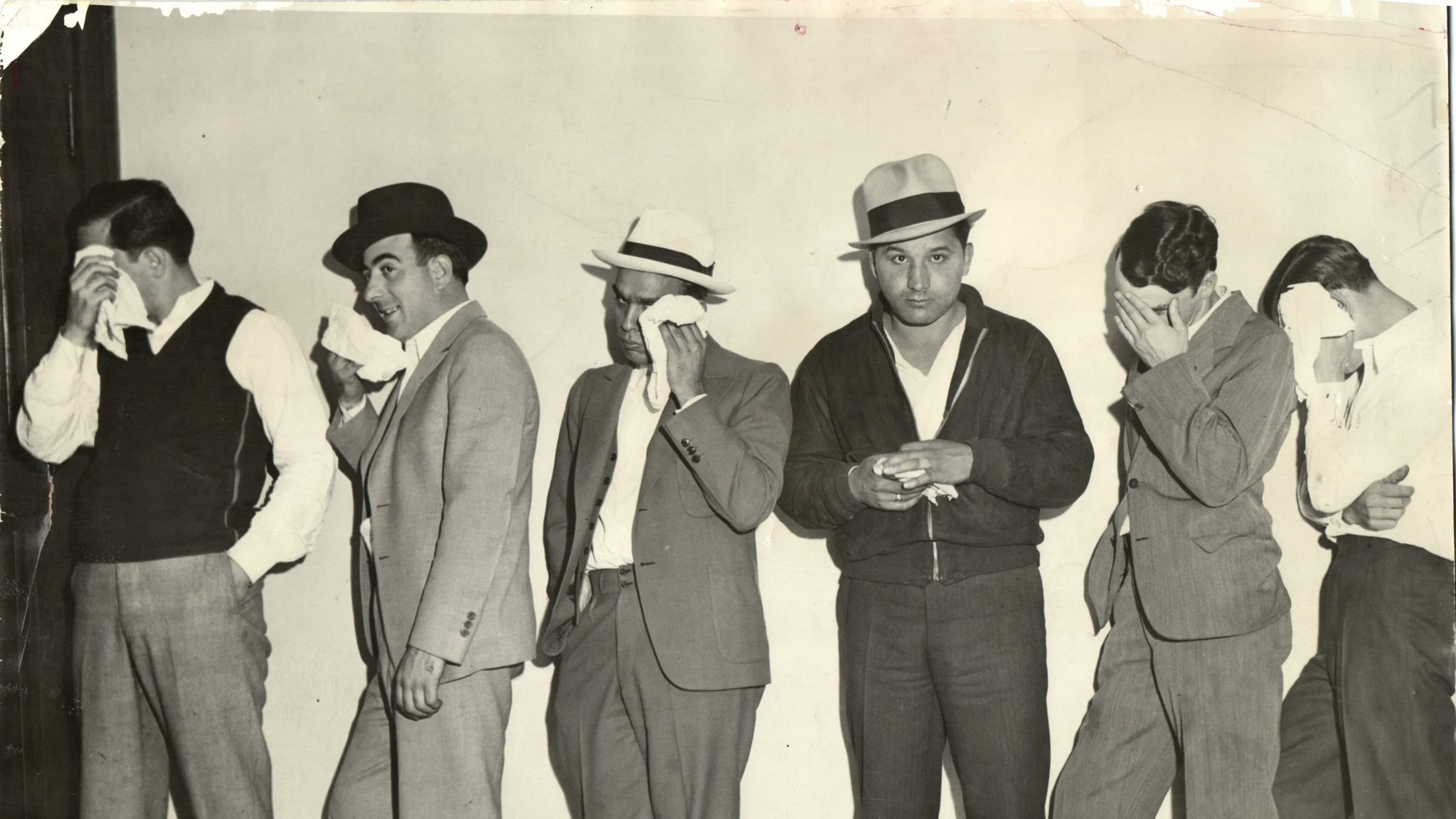
The year was 1927, as Virgil and Thomas immediately found out upon their return to Windsor, the muddy streets abustle with well-dressed shoppers and sloppy, mustard-stained drunks. Mr. Abrahams had taken them on heartily and introduced them to the vivacious multi-faceted underworld of crime, eventually granting them oversight of the organized rum-running operations, prohibition recently having been repealed in Canada but still as strong as ever in the good ol’ US-of-A. Abrahams had installed them in the royal suite of the recently opened Windsor Court, 1616 Ouellette Avenue, a grandiose establishment of high-class aspirations, and Virgil and Thomas, after a considerable period of time-discombobulation, found themselves overjoyed at their new prospects, for no longer did they find themselves as lower middle-class Bohemians, but rather as feared and respected men of “industry”, close enough to the cream of the city’s crop to fly by unbothered with all their various semi-clandestine ventures. Sure, they missed their century well enough, but they had discovered in these roaring twenties a sense of daring frontier freedom, with many a loose-lipped floozy to while away their transtemporal yearnings. Things couldn’t have been any better, and they were ensconced once again in the smoke-wavering apartment at the Windsor Court, talking over their new plan to import high-quality opium from China when, seemingly out of nowhere, Virgil said:
“Thomas, something deep inside of me, something that may or may not be sinister in its import, is telling me that the thread has been broken. I believe, wholeheartedly, that there’s now no going back to our pasts…which are our futures, in a sense, too, I guess.”
“How do you figure?” Thomas said, and sipped a golden rill of triple-distilled whiskey, fresh from Hiram Walker’s distillery.
“It’s too murky to say, man, but my gut tells me that these things simply cannot be reversed. How, exactly, did we even end up here? We traveled through a tunnel, followed a hum or a gleam, I forget which, and ended up on Péche Island, nigh about the tail-end of the Twenties. And how did that happen? And why us? That obsidian phallus of irreversible passage ejaculated us to our destiny, man, and that’s the destiny of transhistorical criminals. We could crawl back, I guess, from Péche to Walkerville, and see how that goes, but…”
“Why would we do that?” Thomas replied with a hint of incredulity. “Where’s the point? We’ve everything we need and more in these times; money, power, prestige, high-class whores…and to be sure, Virgil, but I suspect that even if we were to try and retrogress our way back into futurity, we’d end up split and spliced together with some tunnel-dwelling newt or other, come out the other-side as grim abominations immediately to be shot by some stray bullet fired off from along the Detroit waterfront. So why go back, eh? Our present situation back in those days was squalid; the global situation, even more damning. At least we can anticipate World War 2 here, set ourselves up in the right places at the right times, and reap the rewards of our false precognition, eh? Besides, man, in another say, 10 or 15 years, we can have the honor of traipsing around the city with none other than Wyndham Lewis himself, maybe even meet McLuhan while we’re at it. Wouldn’t that be a ruckus?”
To which Virgil, eternal connoisseur of space-obsessed forms of avant-garde art, inspired by the mention of Lewis into some grotesque and grandiose homoerotic daydream or other, was just about to lapse into a reverent reverie on the importance, the world-historical importance, mind you, of Lewis’ arrival on these Canadian shores when, through a shattering of the windowpane, came—
“First shipment of that high-quality Guangzhou opium, sirs, straight off the Oriental Express!” shouted some fading, fading, far-away voice, from outside the shattered window, disappearing into the dead-air of the sultry, mischievous night.
“Well, we’ll bill Abrahams for the window, but get a load of this!” Thomas exclaimed, unwrapping the fresh newspaper from around the hermetically-sealed brick, peering into its earth-lit innards, a solid compressed weight of pure brown-green narcosis. “And what, exactly, did he want us to do with it? Bring it to the man upstairs, I presume?”
“Yep. To Arnogglio, exactly. He’ll know what to do with it. And where to bring it. And who to sell it to. Touch base with him and it’s all a-go, man, the wheels shall turn in syrup-slow motion, a dealer on every street-corner. Then, Thomas, my brother, we’ll be even richer than we are now. Deliriously rich, really.”
“Then it’s only a matter of time, isn’t it? We’ll move weight, expand our operations, corner the market from Windsor to Montréal…”
“And in the following years, when the Hell’s Angels are finally born from their bloody suppuration…then, and only then, shall we lay claim to all the west-coast. Our grandchildren, surely, shall inherit our kingdom; and then, back in those days from whence we came…”
“All those fentanyl addicts, man! The scourged children of our plotting chicaneries! Evil, isn’t it, Virgil? And to think I’ve half a desire to repent in prayer…”
With that they rose from their plush, velvet, satin-lined seats and turned out the lights, leaving their inglorious suite with a soft shutting of the door behind them, to move into the brilliantly lit and moonlight lacquered halls of the Windsor Court, ambling their way cock-suredly through the halls and up the manicured staircase to the third-floor, searching for the grandest room of all, teeming with incense and hashish smoke, the domicile of Arnogglio, punch-drunk and elbow deep in sinister designs of import and export, his suave, well-cut jawline reflecting all the glories of grim histories, in pursuit and fading away, that implicated the each of them in machinations much too tangled to be discerned…
-- Jacob Brown is a writer scratching away from somewhere above the living corpse of "Upper Canada."