Part One: Toil Not and Neither Spin
My father believed in flowers. After staring all day at his computer monitor, Hervé found sanctuary in the backyard, weeding and watering his many beds and planters. We spent many afternoons together, wandering the vast acreage of the Minnesota Arboretum. My father gathered seeds from the most brilliant flowers. He took up the difficult challenge to grow roses from the rose hip seeds, and he loved to hybridize lilies to create new strains and colors. He devoted his summer to growing a floral pageant, until school started up and cold weather threatened his cultivars. Winter winds blew away the petals, and broke the seed pods open. One December day, after an eight-year struggle with myeloma, the chill winds claimed my father. His ashes feed a garden now, at the Arboretum he loved. The rich soil awaits the sun’s return to sprout cosmos and dianthus.
Somewhere in the world right now, an animal constructs her winter nest. Soon everything around her will freeze. What’s a soft animal to do when the ice creeps in? She’ll slow down, curl up, gaze inward, and sleep.
The sun, moon, and planets cooperate, as do humans, animals, trees, and the Earth. The world is an interdependent, cooperative enterprise. We must hold that truth to be self-evident if we want to save the planet. In my garden, frogs and toads crawl under the leaves and find places to hide in the soil. They manufacture nitrogen-based antifreeze and circulate it in their bloodstream. Ice enchants the wood frog. His heartbeat slows and stops. Time ceases its incessant march.
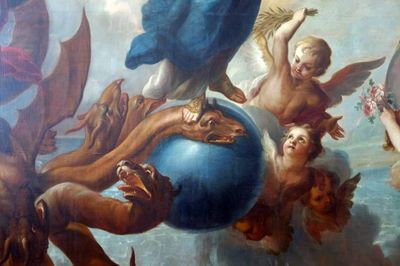
Some say the Buddha stopped time when he meditated beneath the bodhi tree. He sat on a smooth patch of bare earth but King Mara perceived it as a throne. Mara, lord of death and illusions, stamped and shouted, “I claim that seat!”
Attended by tiny rainbows, the Buddha replied, “Join me, Mara, there is room for all.”
But King Mara couldn’t handle the truth. His face twisted. He shouted, “Demons…attack!”
Mara’s army of monsters raced toward the buddha and evaporated like mist in the noonday sun. Mara sensed that his crown was in jeopardy and demanded a witness to the Buddha's enlightenment.
Buddha touched the earth with his hand, saying, “Earth, you are my mother and father. You are my liberation. From the beginningless past to the endless future, you and I are one."
A thousand flower blossoms rained down from heaven. The earth goddess rose halfway out of the ground and her beaming smile confirmed the Buddha's claim.
***
Throughout winter, earth gestates new life. Before any snow melts, she is gravid with the spring. Look first to your compost for signs of life. A subtle spirit invigorates this dirt. Composted soil steams in the chilly air. It’s an exothermic microbiota, energetic and alive. Before any leaf awakens, star magnolias sprout fuzzy buds to prophesy new life.
The ancient oak views life from a longer perspective. Winters pass, the river flows and the oak endures. The oak understands consistency. Its rigid trunk supports flexible boughs. Under the soil, mycelial hyphae connect the oak to its neighbors. Mycologists say that trees exchange nutrients through a kind of “mushroom internet.” It's a network that unites the forest. Underground fungal networks form the largest organisms on earth. Immobile woodland giants communicate through earthbound roots, from trunk lines to tree root servers.
Gazing at this giant tree, I visualize the form of the primordial adi-buddha, Akshobya, the Immovable One. Akshobya is the truth body. Akshobya holds in his hand the vajra, symbol of the shunyata lightning bolt realization that all things are interconnected, empty of independent origination and interwoven by causality. Akshobya’s other hand touches the Earth in a delicate gesture known as bhumisparsha.
Bhumisparsha announces that we are connected to everything that exists or has existed. The Athara Veda describes this as the jeweled Net of Indra. Alone among the gods, Indra was mortal, destined to die and be reborn. Legend has it when the Buddha died, Indra collected gemstones from across the universe, and constructed a sparkling web to welcome the buddha to heaven. The Buddha was unmoved by the ostentatious display of wealth, but observed that each gem reflected every other. We are all nodes in Indra’s adamantine net. Stars sparkle like jewels in the oak’s bare branches. When we polish a mirror and reflect starlight, we become part of something vast and incredible.
John Muir suggests that, “When we try to pick out anything by itself, we find it hitched to everything else in the Universe.”1
If each part reflects the whole, then how shall we refer to that omnipresent interface? Do we call it God? The mystery? Some kind of perfect interfusion? Life animates an infinity of creatures that sustain and define each other. Our cosmos is self-reflective and self-defining. Is our relation to the universe one-in-one? All-in-one? One-in-all? All-in-all? Or all-of-the-above? Our interconnection is holy, holistic, and holographic. Thich Nhat Hanh illustrates interbeing with a Zen koan called Clouds in Each Paper.
"If you are a poet, you will see clearly that there is a cloud floating in this sheet of paper. Without a cloud there will be no rain. Without rain the trees cannot grow and without trees we cannot make paper. The cloud is essential for the paper to exist. If the cloud is not here the sheet of paper cannot be here either. So we can say that the cloud and the paper inter-are."2
The philosopher Leibniz speculated that we all reflect the universal consciousness, a singularity which he called “the monad.” The monad is the whole of creation and, at the same time, every microscopic particle of dust. It’s the antidote to dualistic thinking.
A life, birthed in serendipity, is the beneficiary of everything that has come before. Each droplet of water that hangs, suspended from the spider’s web, reflects the other droplets. What matters one drop of water to the ocean? No more and no less than everything!
Part Two: Wish You Could Be Here Now
The luminous mind manifests between waking and sleeping so I keep a notepad handy to record my thoughts. In the liminal dream state, I can communicate through speech or in writing. Hypnagogic logic can be quite ingenious. The structure of a bedtime story implodes as I drift into a dream. Ideas explode like fireworks before I wake. Somewhere a rooster is crowing. Shall I banish my reverie? Dreams deliver insights but it’s only upon awakening that their potential manifests.
I am awake but I’m not rushing. The Dalai Lama advises that the moment before we arise is a fruitful time for contemplation. Before I cast off my coverlet, I pause to meditate. With my powers of evaluation still suspended in a dream, ideas flow freely. Clear light refills me when I let go of my thoughts.
Shamans describe awakening as a time to gather power. When you wake, take time to observe your dreaming mind, which surrenders cause and effect to the world of imagination. By contrast, the ego stakes its claim in the waking world, where actions determine our destiny.
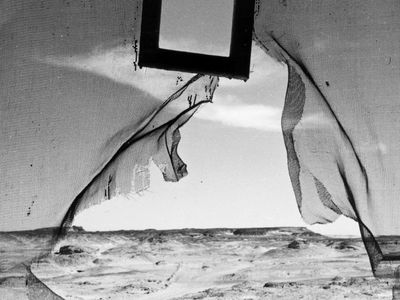
The Wixitari Huichol practice dream yoga. In dreams, they travel across a vast desert to Wirikuta, where great secrets are revealed. Wise ancestors share their knowledge through our dreams and meditations. The Wixitari share these revelations in their art and stories. Buddhists tell a similar story about Padmasambhava, the founder of the Buddhist Nyingma school. Padmasambhava’s teachings, documented in the Book of Great Liberation and other texts, were transmitted in dreams and revealed over hundreds of years to the practitioners of Nyingma.
Can I learn from dreams to accept life’s gifts and let go of outcomes? Our high-tech culture of immediate gratification has left me drunk on power and the illusion of control, yet deep in my heart, I know the Earth can manage just fine without me. It’s easy for people to lose their way in this world of mixed messages and manipulated marketing. Don’t believe in a climate of illusion that resists compassionate action! The best decisions emanate from the union of heart and mind.
Illusions tend to accumulate until they can no longer support each other. That’s when the entire talus slope of our perception shifts, slides and reconfigures. Like gravity, causality can’t be ignored for long. Scientists do the holy work of dispelling our incorrect assumptions. When even real things are impermanent, the unreal doesn’t persist for long. Touch the earth to know what’s fundamentally true. Don’t we all seek her support beneath our feet?
I’ll admit that I have many questions: “What comes before all? Who holds up the world? What is primordial, interconnected and enduring? And what happened to the wood frog that froze with the first snow and whose heart awaits Spring’s anti-freeze?”
In the moments before I rise, I dedicate my efforts to the liberation of all sentient beings and I make a commitment to appreciate myself and cherish others. I extend my compassion across all time and space.
Buddhists describe a great perfection that arises in meditation. I find enlightenment within when I banish all illusions. I’m connected to everything around me, without judgment, fear or aversion. In the pause between sleep and awakening, I can see all the way to Wirikuta. Be exquisite in this moment. May we all “Be Here Now.” Surprise me, world!
The garden gifts me with surprises and answers my questions, “What’s in bloom and what can I harvest?” A body’s dissolution provides the building blocks of life. In a dedicated planter box within the arboretum, my father’s ashes nourish floral explosions. The planter’s marble seat invites visitors to
rest for a moment and take a photo, framed by cosmos and dianthus. My father found joy in cultivation and dug daily in gardens. I touch the soil in his plot and praise Dad for his dedication. Buddha touches the earth in the gentle gesture known as bhumisparsha. This planet is our grounding. The artist does her best work with her feet on the ground and her head in the sky. She’ll leverage earth’s pigments to birth a panoply of stars. Each brushstroke adds dimension to the canvas, opening space for those bold, chromatic creatures who swim against the flow of entropy to ascend the galactic energy cascade.
“The rivers flow not past, but through us, thrilling, tingling, vibrating every fiber and cell of the substance of our bodies, making them glide and sing,” wrote John Muir.3 Muir preached the gospel of Mother Nature.
I have no independent origination and so I am one with all. I awaken to beauty all around me. I share a helical chirality with all earthly life. Life’s interdependence demands my attention. Mother Nature wants to feed me. She desires my growth and anticipates my efflorescence.
The wood frog is waking up. He’s been frozen for months. Now his heart starts beating. Time begins anew. He chirrups joyfully, “Life, I love you. To breathe is groovy.” He’ll put spring in his step, as he trades his bed of decayed leaves for a home in the hostas, where he will sun-gaze in the light of longer days.
My heart beats in synchronicity. I pause on the outbreath and explore a deep silence. Bathed in clear light, I hear the sound of creation. The big bang reverberates across this universe. Earth awakens our interconnectivity. I arise and sing a song of joy to all beings everywhere.
1. John Muir, My First Summer in the Sierra, 1911
2. Thich Nhat Hanh, The Heart Sutra: the Fullness of Emptiness, Lion’s Roar, August 6, 2012
3. John Muir, Mountain Thoughts, John of the Mountains, compiled by Linnie Marsh, 1938
-- When Fred Pierre isn't performing spoken word at Kent's local bookstore, he's wandering down by the Cuyahoga River or hiking deep in the forest. His work has appeared in many print and online publications including Tiny Seed Journal, The Elevation Review, X-RAY and Culinary Origami.