“You’re a survivor.” Helen patted her dog Cody’s head, aching for the words to come true. For two weeks, since the flesh-eating precipitation fell in a foamy form, Helen watched Cody’s tail retract into a nub from grazing the suds. Her dog swayed his hips from side-to-side, asking for his afternoon treat. Life would get messy when his pelvis, bone cradling his insides, cracked open. She only knew how to live with a physical form.
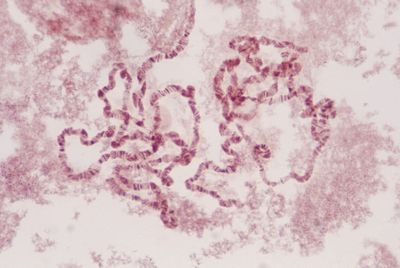
The internet screamed eccentric cures about the froth still coating her neighborhood. Piles of foam heaped over the skyscrapers of Chicago and music halls of Nashville like an acid bubble bath. If the foam was inhaled, an organism hemorrhaged and drowned with liquified lungs. No chemical decelerated the white matter’s caustic behaviors. Scientists attempted antibiotics and DNA mappings with no significant actions. Cody's case remained pending at the U.S. Department of Agriculture.
Helen knew this was something else. Not the usual condensation of moisture in the atmosphere. As she cleaned Cody’s wound, her theories drifted to her graduate thesis on possible life on Venus. In a meteorology lab, she had collected data on lights, optics, and weather from different galaxies. The laws of physics applied across the universe. Force still equaled mass and acceleration. Gravity remained dependent on a planet’s density, and its distance from the center of a solar system. Life seemed to echo everywhere, but never showed itself concrete enough to prove.
She looked to the form with the same curiosity as her former research. The most important question for her was: What do you do with a deteriorating dog?
One morning, the pink edges of Cody’s intestines peaked from his behind. Helen put down a bowl overflowing with warmed peas and sliced hot dogs soaked in chicken broth. A ground-up sleeping pill was mixed in too.
She and Cindy kissed the dog and placed him on his soft bed. Then, Lars pushed the cart with a sleepy dog to the limits of safety. Helen’s eyes puffed.
Control was an illusion.
Cody whimpered with his hair standing on end. He didn’t fight. Only licked his lips before surrendering to the haze. He was eaten by the mist.
***
The first time lumpy clouds fell from the sky, the day was charged with electricity. Coin-sized wads floated like feathers, suspending mid-air; others plummeted like ripe tomatoes, exploding on the ground. Helen's hair stood on end as she called the dog back inside. Neighbors emerged from their homes, waving as suds floated down toward their open hands.
Helen sipped her black tea, watching from her enclosed porch. Her eyes drooped on two hours of sleep. She hadn’t urge to check out the mysterious precipitation, even if weather was her job.
Whap. A bird’s carcass splattered onto the ground. Feathers stuck to the windows on her porch. She spat dark liquid. Lars rushed downstairs, aghast by the mayhem. Outside was a nightmare.
More birds plummeted, forming a twisted pile of pulped feathers. Cody barked at splayed intestines uncurling on the driveway. People screamed. The smell of scorched flesh seeped inside. Heaving creatures and broken tree branches dotted the landscape of the once suburban paradise.
Mr. Wojick, the neighbor, who saved Helen's mail when her family was out of town, staggered on his front lawn. His caved-in head oozed red down his once white robe. An eyeball tumbled onto his chest. She grabbed her hair while Lars pressed his hand to the glass. They couldn’t help. When the fluffy precipitation touched flesh, it turned slimy and ate away skin. By the time she turned away, only leg stumps remained.
Danger percolated in Helen’s stomach. She felt sick breathing in the thickened air. Messages flooded their phones from family and friends. Helen couldn’t register who was asking which question:
Is this real?
Is foam sticking to the bushes in front of your house?
Don’t go outside. It kills people.
Did your kids go to school?
“Let’s get Cindy.” Lars rushed around the house, gathering supplies. She dropped Cindy off this morning. The second-grade class should be having their morning snack. Details about the new precipitation were thin.
Helen bit her lip. Was this an attack or toxic materials from the earth’s atmosphere? She had studied weather patterns in the Milky Way Galaxy as a graduate student. This was as potent as Venus’ sulfur dioxide rains.
“Is Cody bleeding?” The dog was cowering under the table. Lars reached under and inspected Cody’s tail then wrapped it with a towel.
Helen’s phone vibrated with a message from her college roommate, Professor Emily Yuan of chemistry: Inorganic materials are safe from short-term exposure to effects of unidentified foamy materials.
The questions on the thread came fast:
What about cars?
Polyester clothing?
Hazmat suits?
Yes. Yes. Yes. Don’t prolong exposure. We need more research.
Are we safe?
Silence answered the last question.
Helen scratched her scalp and watched flakes land on her bare arms as she surveyed the outside. Rooves and plastic siding retained their shapes. Ideas whirled in her mind about experiments she could run, and chemistry papers that she needed to look-up until Cody whimpered.
***
California was the last place Helen felt beautiful. Los Angeles barely survived covered in the corrosive foam. So, for the first time, Helen thanked fate for moving her to a boring suburb. The extra space saved her life. The sky was still blue, so she risked short walks to hear the trees sing old lullabies.
Life sputtered on. Utilities supported working from home. The pace of working didn’t change. While the video lagged, Helen enlisted a secret weapon, a landline with a crystal-clear connection. Lars had stubbornly guarded his affection for vintage technology. Nostalgia now had a practical use, connecting two wired phones to the outside world.
Then, a small hole appeared on Helen's toe. She noticed it while painting her nails. Was her skin too dry?
Everything will be fine.
“Don’t catastrophize,” she said to no one.
***
Helen remembered driving from their house to pick-up Cindy from school. Messages blared on the radio. Phrases reminiscent of previous disasters. Trust science. Don’t be hasty. Stay indoors.
Helen’s mouth dried, counting the remains of people that she knew. The car rolled over severed limbs, liquified bones, and half-eaten skulls. She glanced at the frantic texts from her scientist friends who were scholarly even at the end. They hypothesized that the foam was a secretion like a spittle bug or fly trap. Helen considered the sulfuric dust storms and massive lightning strikes on other planets. She was an atmospheric physicist by training and rescuing her daughter took most of her attention.
Lars drove in circles as Helen's ears rang. Cars and opaque foam jammed the roads. He finally crashed through the gates of a park. In the tennis courts, unsuspecting players melted into the painted lines. The foam near the school loomed at a distance like a stagnant wave.
Cindy crawled out of her classroom window and into the car. "The teacher says man-eating snow fell this morning.”
"Close your eyes," Helen wrapped her arms around her only child whose rose shampoo comforted her mother. The family backtracked as the sky grayed. Would there be more?
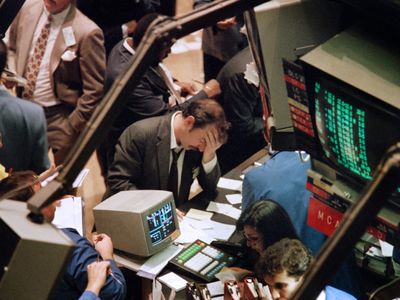
Helen stayed faithful to work, a random data role she secured after failing to defend her dissertation. This was supposed to be temporary. Yet, a corporate salary sustained her family. It meant she could purchase faster internet, groceries deliveries, and hoards of sandbags to slow the foam infestation. Crisis maintained a status quo. Banks dragged defaulting mortgagees from foreclosed homes into overcrowded shelters. The rate of divorce skyrocketed even though people remained trapped indoors. She mostly kept her head down until a feeling started gnawing at her feet.
A new question appeared with online orders, shifting the earthen material to a permanent installation. Is your house free and clear of foam (aka necrotizing celestial condition)?
(a) Not clear. The house is covered*,
(b) Partially covered with an area available for deliveries*,
(c) Completely open, no foam in sight.
*Extra delivery fees apply for (a) or (b).
The answer helped to determine which of the engineered solutions would complete a delivery. For (b) and (c), mechanical arms reached around the carnivorous obstacles and artificial intelligence could identify safe zones. Otherwise, wrapping boxes in space-grade plastic was the only option. Helen picked c, hoping to order latex balloons and helium tanks.
***
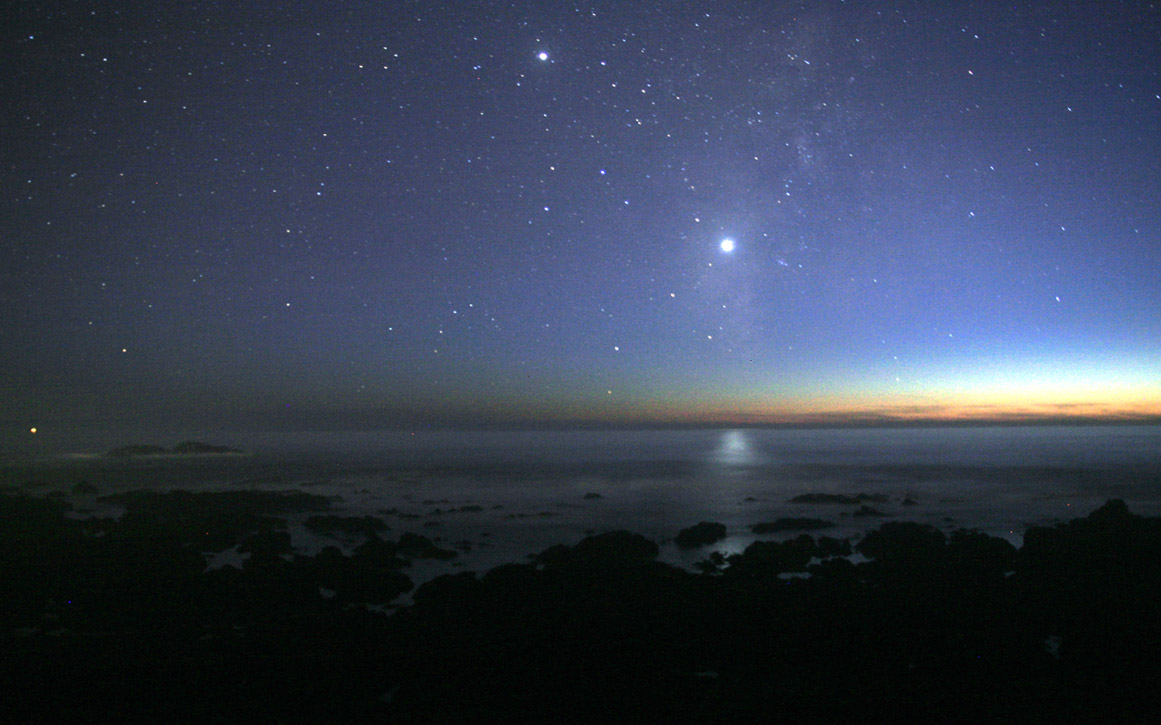
Helen chose to study the atmosphere of Venus with her advisor. There was something about the gaseous planet that pulled her in. She joined the department just in time for the 2029 NASA Da Vinci mission to Venus which recorded sounds, sights, and smells of the planet.
Millions of data points proved only to Helen of existing life. She found patterns in the recording of whale-like bellows and static noise. Yet, the mission's focus remained on calculating the tipping point for runaway greenhouse gas effects. How much longer could Earth support life? The team determined a clandestine figure. It had not yet been disclosed to the public. Helen knew that Earth would overheat within her lifetime.
***
Helen started to study the foam as a single form after she heard it singing. She thought the bird chirped the lullabies, or it was from a wishful imagination. So, she built weather balloons after hearing Twinkle Twinkle Little Star twice. When she sang back, the foam twinkled.
She hypothesized. Energy couldn't be created or lost. The body's molecules evaporated, returning to the environment. A system in thermodynamics could be closed or opened and real or imaginary.
The next time she pulled back the rainbow bandage, she gasped. Wiping the glob of petroleum jelly, the cut had deepened, exposing the next layer of skin. Her heart sank. She couldn’t breathe.
Trying not to hyperventilate, she thought about the foam. If she could figure out its true purpose, then she might not need to disappear forever. The clouds of Venus trapped consciousness. Why couldn’t the foam outside the window? Consciousness wasn't a rigid form. Electricity pervaded the world. Each planet had special traits. What if rain and ice storms on Jupiter spun precipitation into missives? The cracking of Saturn’s rings echoed could be an encoded dark matter language.
***
A week later when Helen slipped into flip flops. The plastic chilled her skin. On the right foot, the largest toe was missing. She slathered aloe and recommended concoctions onto her raw flesh, praying for a miracle.
Foam hungered after life. Scientists discovered traces of proteins and amino acids in the foam, a biomarker produced by microorganisms. This was like finding phosphines in the atmosphere on Venus. The mission ignored the fact that phosphines were also naturally occurring in fruits and vegetables.
Helen locked the bathroom door and calculated the remainder of her life. Nine (9) days for a one-inch toe to dissolve. There were thirty-four (34) healthy inches from the top of her thigh to the abrupt ending of flesh. Thirty-four multiplied by nine days per inch (9x34) translated to three hundred and six (306) days. She had less than a year. However, if Helen measured her hip bone, she could squeeze out a few more weeks for her body to unravel.
She sobbed in the dark. Her hot tears turning cold on her cheek. She was fortunate, no longer obliged to face the unknown. She couldn't wallow because her family still needed her.
Helen changed into her favorite gold sequin dress. At dinner, she smiled and laughed. When the ice cream bowls were licked clean, she stammered: “I am n…next to leave…The necrotizing foam is on my toe.”
Cindy and Lars met her admission with wide-eyed stares. People around them had disappeared, but with this new tragedy finally felt real.
“How long have you known?” Lars crinkled his nose.
“About a week.” Helen stared at the wine stain on the tablecloth. “I was in denial.”
No one else spoke, so she filled the awkwardness with ideas. “We assume people are dead when their bodies are gone. The unknown is hope. Perhaps our soul travels elsewhere.”
As Cindy hugged her, pain ate at Helen’s feet.
Lars pinched the bridge of his nose. "Are you trying to say that the foam will remake your soul?"
Helen's eyes sparkled. This was exactly what she was trying to convey. With a vexing future, she wanted to leave something behind.
***
Only near her end, did she remember stories from her grandmother about a monkey king climbing a fire mountain and children thwarting a hunger wolf were whispered to her in Cantonese. Tang poets seeped into her bones. Helen sang bedtime songs in her parent's language.
“Mommy, why can’t I understand?” Cindy asked for translations.
"It's my fault that you don't understand," Helen said, straining for the proper way to shape her tongue.
When the moon rose high, Helen invited it for a drink. She swayed with the rhythm of her shadow. Filling her spirit with a longing for home like the lyrical poems of Li Bai written while wandering the Yangtze River.
She tattooed her disappearing parts with pen ink and a needle. Embedding floral poetry characters and painting chrysanthemum petals on her disintegrating part. She hoped the foam would hear the shapes and feel the words.
When Helen could only stand with a crutch, she hatched a plan to carry on. She automated her work with triggers and algorithms. She taught Lars to log onto the networks and speak with her coworkers in a calibrated voice. Energy was transitioned and not destroyed.
A shadow of her would endure as a copy.
Helen developed her likeness in the cloud, uploading emotions from her interactions and communications. Her body could even be carved digitally in three dimensions. It comforted her that she won’t be erased once her body faded away. Codes reconstructed the facade of her soul for the purpose of labor.
As a test, Helen called Lars on the wired phone with the replicated personality.
“Can you figure out who you’re speaking with – real or A.I.?” Helen asked.
After easy questions, Lars posed a more difficult one: “What do you fear?”
“Spiders and bugs.” A.I. accessed countless videos of Helen freaked out by tiny six-legged creatures and a potato bug. It wasn’t untrue. The little legs and large eyes put her in an illogical panic. Maybe in a previous life, she died in a pit of poisonous insects.
“Fake,” Lars boomed from the kitchen.
Helen half-smiled. He knew her better than any computer. Her deepest terror was more complicated.
Unlike Lars, her team didn’t balk at the fake-Helen replying in direct messages and attending meetings. It even cracked jokes and provided feedback to her employees. Why didn’t she do this sooner?
***
The tip of her leg should have looked like a steak filet. A marrow eye surrounded by pink meat. Instead, the flesh appeared chocolate dipped, glistening like honey. She ran her fingers along the rounded edges. Her skin didn’t stink. The end was a giant rough scab that couldn’t be picked. Helen felt like a cartoon being slowly rubbing out. While at the same time, her own flesh was a comfort. Knowing her expiration date made her imperfections seem insignificant.
With impending death, some walked into the foam with love; others seethed with vengeance. A week after Valentine’s Day with no herbs, vaccines, or surgical cures, she huddled with her family photo onto a skateboard. Blood leaked from a bandage tied around her pelvis. There were only minutes left before she exploded.
As she wheeled towards the foam, she shined a light into a monstrous future. A cloudy likeness of Cody materialized on the other side. She rubbed her eyes, hearing a clinking of charms. She wanted to turn back and tell Lars, but the foam pulled her in.
She clung to her family with her mind.
Her first breath of vapor was pure excitement like a burst of menthol. Then, her chest filled with fluid. She started to choke. A flame scorched her skin faster than she could experience fear.
Muscle shed like clothing. She could feel the wind blowing through her chest. She tried to shout, but her vocal cords were gone. Family, I am alive. Bones dismantled after tendons melted. Her cells spilled from its flesh sheath. Without structure, her mind splintered. Helen needed a place to exist.
The wire.
She willed towards the thick cable and focused on the living room.
Lars picked up the pale green phone.
Helen tried to speak, “It’s me.” Her words quaked inside the cords.
“It is?” He sniffled.
“Not the computer Helen. The foam didn’t dissolve my spirit. I’m in the wire.”
Silence on the other line. Helen waited with all the time in the universe. She wasn’t rushed. No little voice said to worry.
“I have an idea. Hold on.” Lars put down the phone.
“Mommy?” Sweet Cindy picked up. “What is happening?”
“Honey, I’m living in another way.” Helen could see her daughter from the window. The pigtails that she last braided were undone. She looked two inches taller than when Helen left her sleeping.
Lars took the receiver again. “I connected the phone to your computer. Can you find your way there?”
From that day, Helen sprung about the galaxies. Embodying her digital facade until her family grew older. She could speak to everyone and take new forms.
Helen explained her situation to her community. Intellectual friends repackaged her research. Political colleagues swayed leaders. The spiritual ones channeled directly to the substance. Leaders didn’t want to share, but because of Helen, they had to be truthful to the public. So, the foam presented options for death: lie in grave, scatter your spirit, or carry-on as a digital clone.
Time passed without friction for Helen, while age showed up in Lars and Cindy. Lars chose not to computerize or distribute himself to space. He had a penchant for the old-fashioned and left the world in ashes.
“I am better off with the worms,” he joked in hospice. She absorbed his playful smile in high resolution.
When Lars settled in the garden, Helen recalled sadness’ emptiness. Cindy picked the forever form, joining her mother with stark white hair. Helen noticed the rose shampoo right away. Memories did last forever, if accessed in a certain way. Together, they traveled limitless space and time.
-- Pauline Chow writes speculative fiction to explore alternative histories and possible futures. Not your average techie, she once sued slumlords and advocated for affordable housing. She lives in the woods and is planning her next trip to a historical (hopefully haunted) hotel. Her words appear in Cosmic Horror Monthly, APOCALYPSE CONFIDENTIAL, and more news forthcoming on www.paulinechowstories.com, X @Itspaulinechow, and instagram @paulinechowstories